
A tennis court surface plays a major role in how the game feels, performs, and holds up over time. From ball bounce to player comfort, the right surface choice can improve both playability and long-term durability. Acrylic and cushioned systems are two of the most popular options, each offering distinct advantages for different needs. Understanding how these surfaces compare helps homeowners, clubs, and facilities make a smarter investment. In this blog, we’ll break down the differences between acrylic and cushioned tennis court surfaces to help you choose the best option.
Key Takeaways
- Standard acrylic hard courts are more affordable to install and remain the default choice for many clubs, schools, and municipal parks in Hilton Head.
- Cushioned acrylic systems typically reduce impact forces on players’ joints by roughly 10–20%, making them a better fit for older players, juniors in heavy training, and high-use facilities.
- Ongoing maintenance cycles, cleaning, crack repair, and recoating every 4–8 years, are broadly similar for both surface types; the primary cost difference lies in initial installation and extra cushioning layers.
- The best choice depends on who plays (age, level, volume of play), local climate conditions, and long-term budget rather than just upfront price.
- Both surfaces deliver consistent bounce and professional-level play quality when installed correctly on a solid base.
What Is an Acrylic Tennis Court Surface?
An acrylic court is a hard court built on an asphalt or concrete slab, finished with several coats of 100% acrylic color and texture layers. This represents the most common court material used globally.
A typical acrylic system follows this construction sequence:
| Layer | Purpose |
| Base (asphalt or concrete) | Provides structural foundation and drainage |
| Acrylic resurfacer | Fills voids, restores texture, bonds layers |
| Color coats (1-2 applications) | Delivers a playing surface and visual appeal |
| Line paint | Creates court markings |
| Optional textured top coat | Enhances traction and ball behavior |
The playing characteristics of standard acrylic include medium court speed, predictable ball bounce, and a firm underfoot feel. Tennis balls respond consistently across the surface, delivering the high bounce that players expect from hard courts. However, this firmness transfers more impact to players during play compared to softer surfaces.
Most public parks, high-school facilities, and many college complexes choose acrylic because it balances cost, durability, and familiar performance, making tennis court construction and design an important part of long-term planning. The surface can be tuned slightly through texture and sand content adjustments to play faster or slower, but it always remains a true hard court in terms of impact transmission.
Standard acrylic floors are low-maintenance compared to alternatives like natural clay, which requires constant watering and daily attention. This makes acrylic particularly suitable for facilities without dedicated maintenance staff.
What Is a Cushioned Acrylic Tennis Court System?
Cushioned tennis court surfaces are hard courts that include one or more shock-absorbing cushion layers between the base and the color coats. These cushioned systems use multiple layers of elastomeric or rubberized materials, often incorporating rubber granules, to create a more forgiving playing surface.
The basic layer structure includes:
| Layer | Function |
| Asphalt or concrete base | Structural foundation |
| Primer (if needed) | Promotes adhesion |
| Cushioning layers (2-4 coats) | Absorbs impact forces |
| Acrylic color coats | Playing surface and appearance |
| Line paint | Court markings |
Because tennis balls still contact a textured acrylic surface, bounce and speed remain similar to standard hard courts. The difference lies in what happens beneath; the sub-layers absorb part of the impact from foot strikes, reducing stress on the body.
Laboratory tests and manufacturer data often show an impact reduction in the range of 10–20% versus non-cushioned acrylic. Players typically describe this as a “softer” feel on knees, hips, and lower back, particularly noticeable during serves, hard stops, and quick directional changes.
Cushioned courts are commonly chosen for:
- Private clubs focused on member experience
- High-volume lesson and academy courts
- Multi-sport courts used for tennis and pickleball
- Facilities catering to senior players
- Training centers prioritizing injury prevention
Comparing Playing Experience and Performance
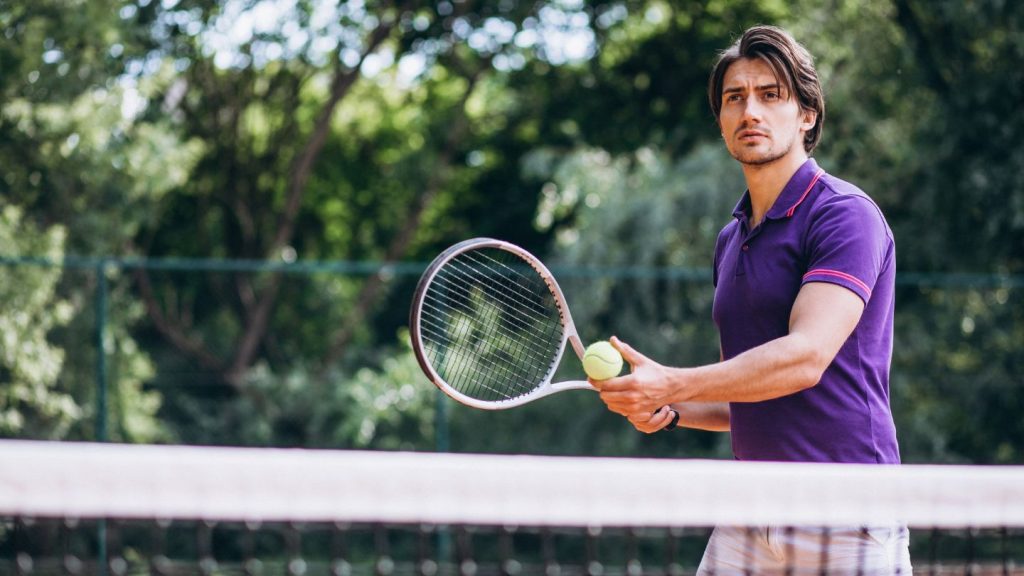
Both surfaces deliver consistent, internationally-recognized hard-court play, but the on-court feel differs noticeably for frequent players. Understanding these differences helps match the right surface and tennis court accessories and equipment to your facility’s primary users.
Ball Behavior
When installed in the same speed category, both acrylic courts and cushioned hard courts produce similar bounce height and trajectory. The consistent bounce that makes hard courts popular for competitive play remains intact with cushioning. Players may notice slightly reduced vibration feedback on cushioned systems, but ball speed and response stay predictable.
Player Comfort
Standard acrylic feels firmer and “livelier” underfoot, which some players prefer for its responsiveness. Cushioned courts soften landings, especially during:
- Powerful serves requiring explosive leg drive
- Hard stops when chasing wide balls
- Quick directional changes during baseline rallies
- Extended points with multiple sprints
Read More: Reasons for Choosing Cushioned Tennis Court Surfacing
Who Benefits Most from Cushioning
| Player Group | Why Cushioning Helps |
| Juniors in development programs | Reduces cumulative stress during intensive training |
| Adults play 3-5 times weekly. | Faster recovery between sessions |
| Seniors (55+) | Less strain on aging joints |
| Players with prior injuries | More forgiving of repaired knees and hips |
Competitive players often appreciate that cushioned courts still allow fast, aggressive play without mimicking the very slow conditions of clay. This makes them suitable for training environments that simulate professional hard-court conditions with less wear on the body.
Health, Safety, and Player Longevity
Surface choice becomes a long-term health decision for programs running heavy weekly schedules. Academies, schools, and community centers hosting daily practices should consider how surface hardness affects their players over entire seasons and careers.
Understanding Impact Forces
Every change of direction, every landing from a serve, every sprint to the net creates impact forces that travel through ankles, knees, hips, and the lower back. Over thousands of repetitions each season, these forces accumulate. The surface beneath players either absorbs some of this stress or transmits it directly into the body.
Available evidence suggests that more forgiving surfaces generally correlate with fewer overuse complaints in long-term players, especially among:
- Older age brackets (50+)
- Those with previous joint surgeries
- Players returning from injury
- High-volume training athletes
Practical Example
Consider two similar high-school programs running daily practices throughout their competitive season:
- Program A trains on firm acrylic courts. By mid-season, coaches notice more complaints about knee soreness, longer recovery times between sessions, and occasional practice modifications for players managing discomfort.
- Program B trains on cushioned courts. While players still experience normal training fatigue, reports of joint-related soreness tend to be less frequent, and players generally report feeling fresher for weekend matches.
This difference becomes more pronounced over multiple seasons. Cushioned acrylic systems are often chosen for “age-friendly” and rehab-friendly facilities because they offer joint relief without switching to clay or indoor carpet, which have their own drawbacks for competitive training.
Climate and Seasonal Considerations
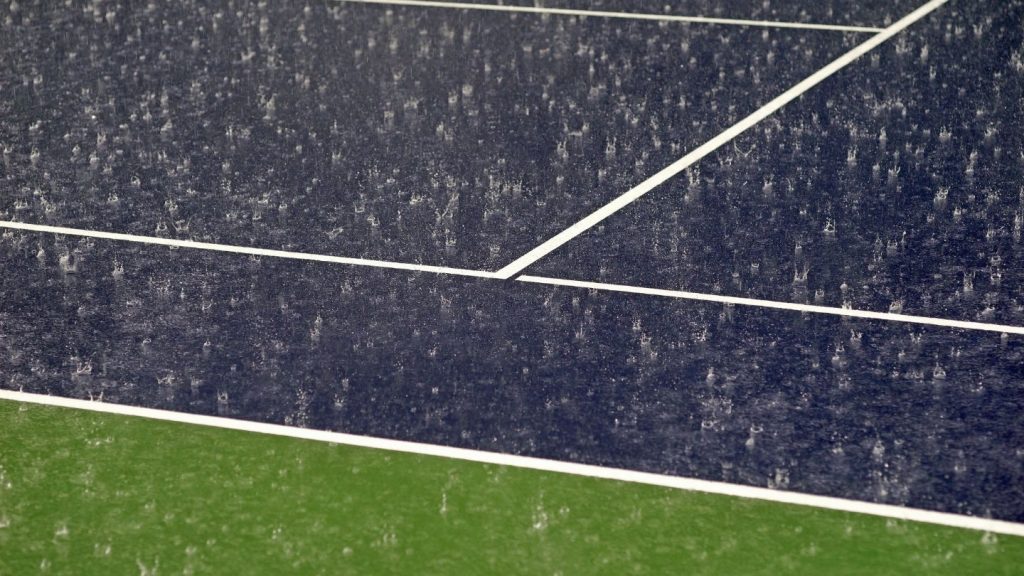
Climate significantly affects how long either surface lasts, resurfacing frequency, and when installation can be scheduled. Understanding your regional conditions and maintaining your tennis court after construction helps set realistic expectations.
Freeze-Thaw Regions
Cold climates experience freeze-thaw cycles that accelerate base cracking. In these areas, proper slope, drainage, and crack repair become critical before installing acrylic or cushion coats. Courts in colder regions with temperature changes require more vigilant maintenance, but can achieve better longevity with proper care.
Hot, Sunny Climates
Hot climates cause faster color fading and surface drying. Regular cleaning and occasional recoating become especially important to maintain play quality and appearance. UV-resistant acrylic formulations help, but no surface is immune to sun exposure.
Installation Timing
For both acrylic and cushioned systems:
- Avoid installation during cold, wet periods
- Plan projects for warmer, dry weather windows
- Ensure temperatures consistently exceed 60°F (15-16°C)
- Allow adequate cure time between layers
Rushing installation during marginal weather conditions leads to adhesion problems and premature failure.
Indoor Courts
Indoor courts avoid rain and UV exposure but face different challenges. Intensive year-round use means maintenance intervals are driven more by hours of play than weather. Indoor acrylic surfaces often show wear patterns around service boxes and baselines before outdoor courts of similar age.
Read More: Indoor Vs Outdoor Tennis Courts: Main Differences
How to Decide: Acrylic vs Cushioned for Your Project
There is no universal “best” surface, only the best match for your facility’s players, programs, and budget. The decision framework below helps identify which direction makes sense for your situation.
Decision Factors to Consider
Choose cushioning when:
- Most players are juniors in intensive training
- Senior programs dominate court usage
- Players average 3+ sessions per week
- Marketing “joint-friendly” courts provides a competitive advantage
- Long-term player retention is prioritized
- Budget allows for premium investment
Choose standard acrylic when:
- Budget constraints are significant
- Court usage is moderate (recreational use primarily)
- Multiple courts are needed within limited funds
- Low maintenance simplicity is prioritized
- Player base is primarily casual participants
Program Type Considerations
| Facility Type | Typical Choice | Reasoning |
| Competitive training center | Cushioned | Protects athletes during intensive work |
| Private club | Often cushioned | Premium member experience |
| Municipal park | Standard acrylic | Cost-effective for taxpayers |
| High school | Mixed approach | Balance the budget with athlete care |
| Homeowner | Either | Depends on player age and usage |
Phased Approach Strategy
Many facilities successfully implement a phased strategy:
- Year 1: Cushion primary lesson courts and show court
- Year 3-5: Evaluate player feedback and budget capacity
- Future phases: Upgrade remaining courts as funds allow
This spreads investment while immediately delivering premium surfaces where they matter most. Players can choose acrylic or cushioned courts based on preference for that day’s session.
Making Your Final Decision
Combine these inputs when making your choice:
- Player feedback: Survey current users about comfort and preferences
- Climate realities: Assess your regional weather patterns honestly
- Budget forecast: Project costs over 10-15 years, not just year one
- Program goals: Consider what you’re trying to achieve long-term
The right surface delivers years of reliable performance when matched properly to your situation. Whether building a new tennis court or planning a resurfacing project, taking time to evaluate these factors and tennis court maintenance and resurfacing needs pays dividends throughout the court’s lifespan.
Read More: Tennis Court Surface Selection and Performance
The Right Surface Starts With the Right Plan
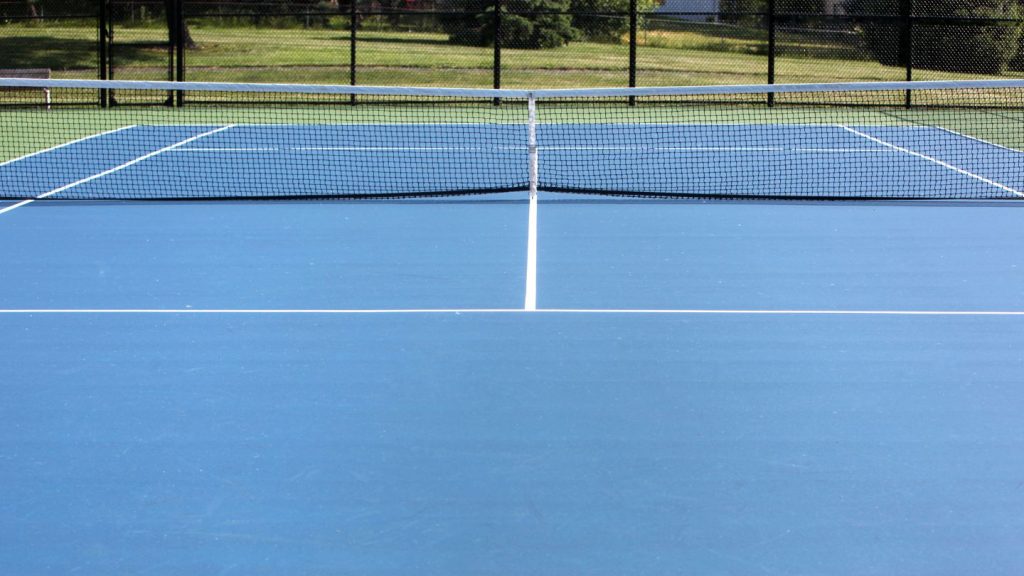
Choosing between acrylic and cushioned tennis court surfaces depends on how the court will be used, who will be playing, and the performance you expect over time. Acrylic offers a firm, fast-playing surface with excellent durability, while cushioned systems add comfort, shock absorption, and reduced strain for frequent play and long sessions.
Talbot Tennis builds and resurfaces courts with performance, safety, and durability in mind. For tennis court construction in Hilton Head, we help you select the right surface system and deliver expert planning, professional installation, and long-term court performance. We also provide pickleball court construction, basketball court construction, and bocce ball court construction to create complete outdoor sports spaces. Contact us today to start building or upgrading a court designed for comfort, durability, and high-level play.
Frequently Asked Questions
Can an existing acrylic hard court be upgraded to a cushioned system during resurfacing, or is a full rebuild required?
If the asphalt or concrete base is in good condition with no major cracks or movement, installers can usually add cushion layers during resurfacing. After repairs and surface prep, cushioning coats are applied over the existing acrylic without rebuilding the base, making upgrades far more practical.
Will a cushioned acrylic court play noticeably slower than a standard acrylic hard court?
Most cushioned acrylic systems are designed to stay within the same general speed category as standard acrylic courts. Any change in pace is usually minor. Players typically notice improved shock absorption and comfort more than differences in ball bounce or overall court speed.
How long do acrylic and cushioned tennis courts typically last before they need complete reconstruction, not just resurfacing?
With a properly built base and good drainage, both acrylic and cushioned courts can last 20 to 30 years or more before major reconstruction is needed. Regular resurfacing every few years and timely repairs help extend lifespan, while harsh climates or weak sub-bases shorten durability.
Are cushioned courts more slippery or harder to maintain traction on when wet or damp?
Cushioned courts use the same textured acrylic top layers as standard acrylic courts, so they aren’t naturally more slippery. However, playing on wet courts should always be avoided. Maintaining proper surface texture through periodic recoating helps ensure consistent traction and safer play conditions.