
Choosing the right pickleball court contractor is key for quality and timely results. In this guide, we will discuss how to choose the right pickleball court contractor by covering the steps you need to ensure you select the best contractor for your needs.
Key Takeaways
- Define your pickleball court vision, including site selection and material preferences, to ensure the final project meets expectations.
- Research contractors thoroughly, focusing on their experience, credentials, and past work, and verify their ability to comply with local regulations.
- Request detailed proposals and compare quotes transparently, including a breakdown of costs and services, to make informed decisions on contractor selection.
Identifying Your Pickleball Court Vision
Before commencing the construction of your pickleball court, it’s imperative to establish a comprehensive vision for the project. This foundational step informs the selection of materials, surface coatings, layout features, and construction specifications, ensuring the finished court aligns with the desired level of performance and aesthetics.
Site selection plays a critical role in the court’s longevity. Choosing a level area with proper drainage infrastructure minimizes future surface degradation and ongoing maintenance concerns. For outdoor pickleball courts, concrete is typically used as the base material due to its structural integrity and long-term durability. Acrylic coatings, particularly cushioned acrylic systems, can be layered on top of the concrete to enhance playing comfort, improve ball response, and offer various customization options. These surfacing systems are ideal for reducing impact strain and maintaining consistent play quality.
Design specifications should be tailored to include regulation court dimensions—20 feet by 44 feet—while accounting for surrounding functional elements such as spectator seating, access pathways, or storage units. These additional considerations will influence overall space planning and user convenience.
Researching Potential Contractors

When selecting a contractor for your pickleball court, it’s essential to identify specialists with demonstrated expertise in sports court construction—particularly outdoor courts. Professional contractors with a strong portfolio in pickleball court construction will have familiarity with drainage grading, substrate preparation, surface application, and fencing solutions specific to recreational or residential installations.
Instead of compiling generic lists of providers, seek professionals who maintain memberships in industry organizations such as the American Sports Builders Association (ASBA), which indicates adherence to nationally recognized construction standards. Reputable contractors should also be able to provide a documented history of completed projects, detailed service scopes, and verified references from previous clients. These references are critical for assessing their reliability, communication, and craftsmanship.
Evaluating Contractor Experience and Portfolio
Assessing a contractor’s previous work and specialization is a key step in the selection process. Professionals with a history of building pickleball or tennis courts understand the specific demands of sports surface construction—from site leveling and substrate compaction to surfacing and striping.
A robust project portfolio allows you to evaluate the contractor’s range of capabilities, including layout execution, material quality, and surface finish. Look for examples that demonstrate consistency in construction quality and visual cohesion with the surrounding landscape or facility. Experience in integrating accessories like fencing, lighting, and net systems should also be evident.
Engaging with former clients can provide insight into the contractor’s timeline management, job site coordination, and post-installation service—each of which contributes to long-term project success.
Checking Credentials and Certifications
Verifying a contractor’s credentials and certifications ensures compliance with local regulations and safeguards your investment throughout the project. Confirm that the contractor holds valid licenses for sports court construction and carries comprehensive liability and workers’ compensation insurance.
Professional affiliations, such as with the ASBA, further demonstrate a commitment to quality standards and continuing education. These certifications are particularly important in niche areas like court surfacing, where incorrect installation methods can lead to structural failures or premature surface wear.
Contractors should also have training in safety protocols and adherence to construction best practices, particularly when it comes to slope grading, surfacing techniques, and weather-resilient materials.
Requesting Detailed Proposals
When requesting proposals, insist on comprehensive documentation that outlines scope, materials, labor requirements, and project duration. For pickleball court construction, costs may range between $20,000 and $50,000 or more depending on materials, subsurface preparation, site conditions, and added features like fencing or lighting.
Each proposal should break down individual phases—such as excavation, concrete pouring, surfacing, coating, striping, and cleanup—and detail which subcontractors, if any, will be involved. This transparency is essential for accurate comparisons and future accountability.
Ensure the timeline aligns with any scheduling needs or environmental conditions that may impact construction. Additionally, request a full list of potential permit costs, utility access fees, or equipment rental charges so there are no unexpected expenses during execution.
Comparing Quotes and Services
Comparing quotes should involve more than just identifying the lowest bidder. Scrutinize each quote for material specifications, warranty coverage, surfacing products used, and the method of construction proposed. Investing in high-quality surfacing materials, such as cushioned acrylic systems or advanced coating formulations, may result in higher upfront costs but offer long-term performance benefits and reduced maintenance.
Pay close attention to warranty terms on both materials and workmanship. Some contractors offer extended guarantees on surfacing, especially if they’re certified installers for specific product brands.
Comprehensive services should also include post-installation inspections, optional add-ons like fencing or windscreens, and a clear communication protocol throughout the build process.
Site Visits and Consultations
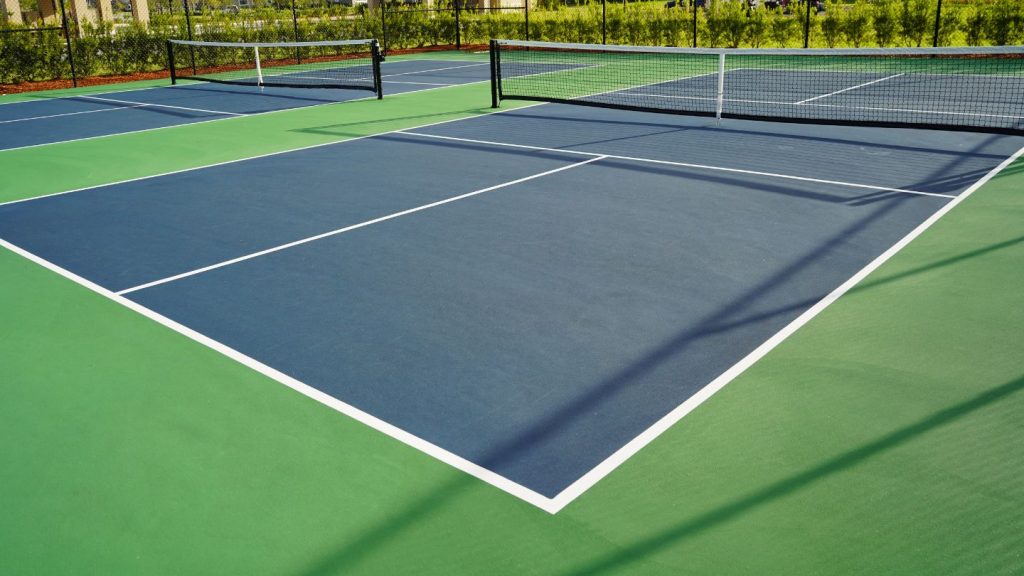
On-site consultations are instrumental in aligning your project requirements with a contractor’s capabilities. During these visits, experienced contractors will assess ground stability, grading needs, drainage conditions, and spatial orientation to determine the feasibility of installation and any site-specific challenges.
These evaluations also offer an opportunity to discuss surfacing options, court orientation relative to sun exposure, and the inclusion of optional features. Professional contractors will be able to suggest layout refinements and construction sequencing based on these observations.
A productive consultation also sets the tone for communication and responsiveness—factors that are just as critical to project success as technical competence.
Understanding Contract Terms
Before signing, thoroughly review the contractor agreement to ensure all responsibilities, deadlines, deliverables, and payment terms are clearly defined. Essential clauses should include scope of work, payment milestones, warranty policies, and change order procedures.
Avoid vague terms or generic inclusions—everything from surfacing brands to fencing types and drainage solutions should be specified. Additionally, request clarification on any penalty clauses, termination rights, or delays due to weather.
Having legal counsel review the document is advisable to protect your interests, especially in large-scale or time-sensitive projects. A clear contract builds trust and sets expectations for accountability.
Importance of Communication and Support
Ongoing communication throughout construction helps mitigate delays, clarify scope changes, and maintain alignment between project stakeholders. Professional contractors establish structured channels for progress reporting, feedback collection, and schedule updates.
Clear communication also ensures that material orders, subcontractor coordination, and quality control measures are handled proactively rather than reactively. Establishing a primary point of contact within the contractor’s team simplifies information flow and decision-making.
Support after completion, such as post-installation inspections or surface maintenance recommendations, should also be included in your evaluation of contractor communication standards.
Summary
To wrap up, choosing the right contractor for your pickleball court construction is a detailed process that goes beyond just comparing prices. It requires a thorough evaluation of qualifications, a careful inspection of project portfolios, license verification, and securing detailed proposals. Conducting site visits and establishing clear communication are key to ensuring that your project aligns with your vision from start to finish.
Talbot Tennis is a leader among pickleball court contractors in South Carolina, offering unmatched expertise in every aspect of court construction. With a deep understanding of site preparation, surfacing systems, and ensuring long-term court performance, we deliver personalized solutions tailored to your exact needs, supported by our industry knowledge and exceptional service. Ready to bring your pickleball court vision to life? Contact us today!
Frequently Asked Questions
What should I look for in a pickleball court contractor’s portfolio?
Look for diversity in court types, quality of surfacing, attention to layout, and evidence of work on similar-scale projects.
How do weather conditions affect outdoor pickleball court construction?
Temperature, humidity, and rain can impact curing times and material performance, so planning around seasonal conditions is essential.
Can pickleball courts be customized for multi-use or shared space environments?
Yes, courts can be designed with blended lines, dual-purpose surfacing, and flexible layouts to support multiple sports.