
Building a pickleball court might look simple at first glance, but getting the surface, layout, and drainage right takes real expertise. A professionally built court not only plays better, but also lasts longer with fewer repair issues over time. From correct leveling to proper coatings and line markings, every small detail impacts performance and safety. That’s why choosing an experienced court builder can save you time, money, and avoid costly mistakes later. In this blog, we’ll explore the key reasons and advantages of hiring a professional pickleball court builder.
Key Takeaways
- Safer, higher-quality courts: Professional builders deliver a more reliable and safer playing surface than DIY builds or general contractors.
- Sport-specific expertise matters: Specialists understand critical pickleball requirements like court orientation, post-tension slabs, drainage, and USA Pickleball surface standards.
- Long-term cost savings: Proper construction reduces expensive issues like cracking, poor drainage, and early resurfacing, saving money over 10–20 years.
- Better durability and lifespan: A well-built court can last for decades structurally, with resurfacing needed only after years (not months).
- Efficient planning and reduced stress: Pros optimize your space, manage permits/timelines, and provide warranties, lowering risk for homeowners and facilities.
Why Hiring a Professional Pickleball Court Builder Matters
Pickleball has surged from a casual backyard game to one of America’s fastest-growing sports, with participation climbing over 300% in recent years and projections pointing toward 10 million U.S. players by 2025. This explosive growth has driven unprecedented demand for both backyard pickleball court installations and community facilities designed for frequent play.
What many property owners don’t realize is that a pickleball court is not simply a flat slab with painted lines, but requires pickleball court design and construction knowledge from the start. The official playing surface measures 20 feet wide by 44 feet long, but the total recommended play area extends to approximately 30 by 60 feet when you factor in proper clearances beyond the baselines and sidelines. Add in precise slopes for drainage, specific surface coatings for consistent bounce, and compliance with USA Pickleball standards, and you begin to see why specialized knowledge matters.
A dedicated pickleball court builder brings an entirely different skill set compared to a typical landscaper or general concrete crew. While general contractors excel at patios and driveways, they rarely encounter the performance specifications, safety requirements, and longevity considerations that define a professional pickleball court. Professionals who follow or exceed USA Pickleball and American Sports Builders Association guidelines protect your significant investment and ensure the court remains suitable for competitive play if desired.
Reason 1: Superior Court Foundations with Post-Tension Concrete
Post-tension concrete has become the gold standard for high-end pickleball court construction since the 2010s, and for good reason. This advanced foundation method involves placing steel tendons (high-strength cables) within the concrete slab before the pour, then tensioning those cables after the concrete cures. The result is a slab that actively resists cracking and movement rather than simply hoping for the best.
Professional builders design and install post-tension slabs with precise calculations for tendon placement, slab thickness (typically 4 to 5 inches for pickleball applications), and reinforcement patterns optimized for the 30-by-60-foot footprint. This engineering approach addresses the specific stresses a pickleball court experiences: thermal expansion, ground movement, and the concentrated loads around net posts.
Cheaper, non-post-tension slabs often develop problems that undermine your investment. Standard reinforced concrete relies on steel mesh or rebar to control cracking, but it doesn’t prevent cracks; it merely holds them together. Within a few freeze-thaw cycles or seasons of soil movement, these slabs can develop shrinkage cracks, uneven panels, and differential settlement that affects ball bounce and creates tripping hazards.
The connection to long-term value is direct and measurable. A post-tension foundation typically requires fewer structural repairs over its lifespan, delivers consistent performance year after year, and maintains optimal playing conditions for 20 or more years. When you calculate the cost of foundation repairs, surface patching, and premature resurfacing on a substandard slab, the initial investment in professional base construction becomes the more cost-effective option.
Reason 2: Moisture Protection and Vapor Barriers Done Right
Moisture rising from beneath a slab creates some of the most frustrating and expensive problems in a court building. When water vapor migrates upward through concrete, it can cause surface coatings to bubble, peel, and delaminate. The result is slippery patches, unsightly blemishes, and a playing surface that needs repair far sooner than it should.
A properly installed vapor barrier creates a protective layer between the ground and the concrete base, preventing moisture from reaching the acrylic or cushioned surface systems above. This protection preserves color integrity, surface texture, and grip performance for years instead of just a season or two. The difference between a court that looks and plays great after five years versus one that needs complete resurfacing often comes down to this invisible but critical layer.
DIY enthusiasts and non-specialist crews frequently skip or misapply vapor barriers to reduce costs or because they don’t understand the consequences. The short-term savings evaporate quickly when delamination forces a full resurfacing project within just two or three years, a repair that costs far more than the proper vapor barrier would have in the first place.
Reason 3: Precision Surface Finishing for Consistent Bounce and Safety
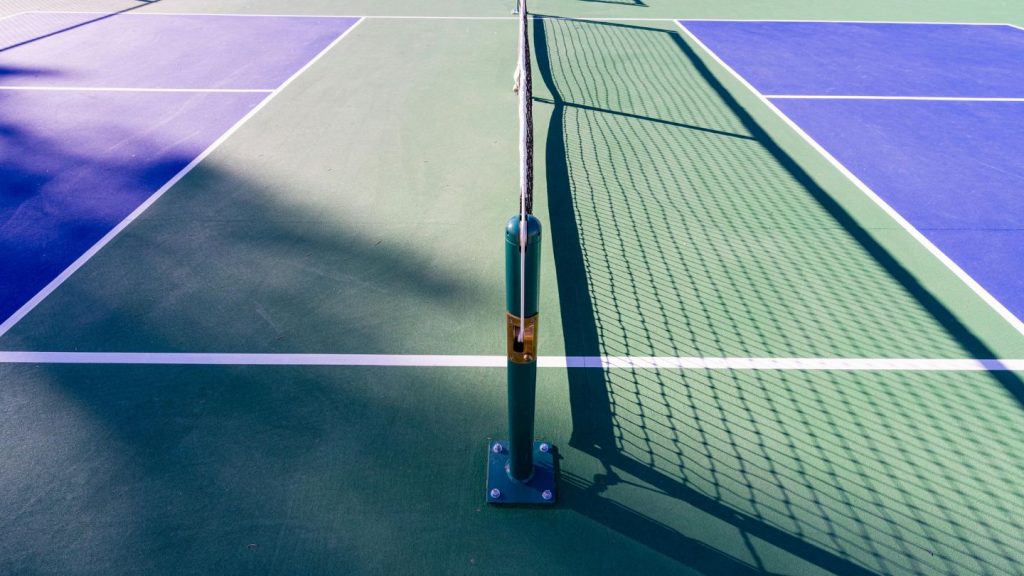
A consistent bounce across the entire playing surface separates enjoyable pickleball from frustrating pickleball. Even a small elevation error, a visible trowel mark, or an inconsistent texture pattern can translate into unpredictable ball behavior, tripping hazards, and player frustration during every game.
Professional pickleball court builders use laser or optical leveling equipment to achieve a smooth, uniform surface with tight tolerances across the entire 20-by-44-foot playing area. This precision isn’t achievable with traditional hand-finishing methods alone; it requires specialized equipment, trained operators, and an understanding of how small imperfections compound into significant problems.
Experience matters tremendously when preparing a surface to receive acrylic coatings. The concrete or asphalt finish must be textured correctly, not too rough (which shreds balls and causes excessive wear on coatings) and not too slick (which becomes dangerous when wet). Professional builders understand how coatings build up thickness and texture, so they finish the substrate with the correct profile from the start.
Compare this to a common DIY or general contractor outcome: a court where puddles collect in low spots (sometimes called “birdbaths”), visible trowel ridges create dead zones where the ball behaves erratically, and uneven surfaces cause players to stumble. These issues may seem minor individually, but they combine to create a court that’s both less enjoyable and less safe than what professional installation provides.
Reason 4: Professional Drainage and Slope Design for Outdoor Courts
Water is the primary enemy of outdoor pickleball courts and outdoor courts of all types. Improper drainage can shorten court life by many years through mechanisms including surface damage, subsurface erosion, algae growth, and freeze-related heaving. A professional drainage design addresses all of these concerns before they become problems.
Professional builders design precise slopes, typically around 1% fall, so water flows off the court quickly after rain without being steep enough to distort ball bounce during play. This slope calculation balances competing requirements: enough pitch to clear water efficiently, but not so much that the court plays noticeably differently in different directions.
Beyond the court surface itself, professionals integrate appropriate drainage infrastructure based on site conditions. This might include trench drains along the perimeter, swales that direct water away from the court, and subsurface drainage systems in areas with high water tables or clay soils. The specific solution depends on local rainfall patterns, soil permeability, and the relationship between the court and surrounding landscape features.
Critically, professional builders plan drainage from the initial grading phase rather than treating it as an afterthought. They evaluate existing grades, nearby structures, and landscaping to prevent water from flowing onto the court from adjacent areas. This proactive approach means the court remains playable soon after rain, resists algae growth, and avoids the cracking and heaving that destroy poorly drained courts.
Reason 5: Optimal Court Orientation, Placement, and Layout
Court orientation significantly affects playability throughout the day and across seasons. Sun glare, shadows, and visibility conditions all change based on how the court is positioned relative to compass directions, and getting this wrong means players spend portions of every day struggling with the sun in their eyes.
Professional builders typically recommend a north-south orientation or a slight adjustment to around 20 to 25 degrees off true north, depending on latitude and local conditions. This positioning minimizes direct sun exposure in players’ eyes during the most common playing hours while accounting for seasonal variations in sun angle.
Beyond compass orientation, professionals study each specific site to optimize placement. They evaluate the location of trees, fences, neighboring houses, and existing structures to reduce shadows that cross the playing surface and wind tunnels that affect ball trajectory. These site-specific considerations often determine whether a court feels comfortable and enjoyable or frustrating to use.
Professionals also maximize space utilization while maintaining safety clearances. They can fit single or multiple courts on a property, convert one tennis court into two to four pickleball courts, or design multi-court complexes for community centers and sports facilities. USA Pickleball recommendations specify approximately 30 by 60 feet per court to accommodate proper run-off space; professionals design beyond just the painted playing lines to ensure the complete play area meets standards.
Read More: Guide to Converting a Tennis Court to a Pickleball Court
Reason 6: Access to Sport-Specific Surfaces, Equipment, and Custom Options
Professional builders maintain direct access to acrylic resurfacing systems, cushioned surfaces, and modular options engineered specifically for pickleball, not generic paints or repurposed tennis products.
This ensures the court performs well in different conditions, recognizing the best surface for your pickleball court in Georgia’s climate and South Carolina’s climate, needs for durability, and consistent play. These sport-specific surface types offer different characteristics that professionals match to intended use and player preferences.
| Surface Type | Best For | Key Benefits |
| Standard Acrylic | Competitive play, high-traffic facilities | Fast play, durability, and low maintenance |
| Cushioned Acrylic | Older players, joint protection | Shock absorption, reduced fatigue |
| Modular Tiles | Indoor-outdoor versatility, portability | Quick installation, minimal upkeep |
| Textured Systems | All-weather outdoor use | Enhanced grip, reduced slippage |
Surface speed, grip level, and cushioning can be tailored to typical users. Courts designed primarily for older players might feature cushioned coatings that reduce joint stress and provide better shock absorption. Facilities focused on competitive play might opt for faster, firmer surfaces that deliver courts with optimal ball response.
Professional builders coordinate every element of the installation process: nets, posts, fencing, lighting solutions, and color schemes. They ensure net heights and clearances comply with standards while offering customization options that make each court unique. Two-tone color layouts, branded logos, lighting for evening leagues using LED lighting for pickleball courts, and acoustic fencing for sound-sensitive neighborhoods are all within reach.
This bundled, turnkey approach saves property owners from juggling multiple vendors and guessing about compatibility between components. Instead of coordinating separate contractors for concrete, surfacing, fencing, and lighting, each potentially blaming the others for problems, a professional builder takes responsibility for the complete court installation.
Read More: What Pickleball Court Lighting is Required?
Choosing the Right Professional Pickleball Court Builder
Not every contractor advertising “pickleball courts” possesses genuine expertise. Some general contractors add the service, hoping to capture demand without investing in specialized training or equipment. Due diligence protects your investment.
Start by examining portfolios of completed pickleball projects specifically, not just tennis courts or generic concrete work. Look for projects completed within the last several years that demonstrate experience with current materials and methods. The track record should include courts similar in scope to your project, whether that’s a single backyard court or a multi-court community facility.
Key questions to ask potential builders:
- How many pickleball courts have you completed in the past three years?
- Can you provide references from recent clients I can contact?
- Do you offer resurfacing services for courts you’ve built?
- What warranty do you provide on both the slab and surface coating?
- Are you familiar with USA Pickleball court dimensions and clearance requirements?
- What surface systems do you typically install, and why?
- How do you address drainage in my local climate?
If possible, visit an existing court the builder has completed. Playing on the surface, or at least walking it and observing ball bounce, tells you more about quality than any photo or testimonial. Look for consistent bounce, proper line marking, and absence of puddles or uneven surfaces.
Verify that the builder understands proper run-off space requirements, common surface systems appropriate for your local climate, and the distinction between court size (the playing lines) and total play area (including clearances). Transparent pricing, clear contract terms, and availability for future maintenance guidance or resurfacing services round out the profile of a qualified professional.
Read More: How Much Space Do You Need for a Pickleball Court
Built to Play, Built to Last
Hiring a professional pickleball court builder is the smartest way to protect your investment and ensure long-term performance. From proper site prep and drainage to accurate surfacing and striping, experienced specialists eliminate common construction mistakes. The result is a safer court with better playability, fewer repairs, and a longer lifespan.
As a trusted pickleball court contractor in South Carolina, Talbot Tennis designs and builds high-performance courts with expert planning, quality materials, and reliable craftsmanship. We also provide tennis court resurfacing, basketball court construction, and bocce ball court construction to support complete outdoor recreation spaces. Contact us today to get started with a court built for years of competitive, worry-free play.
Frequently Asked Questions
How long does it typically take to build a professional outdoor pickleball court?
A single outdoor pickleball court usually takes 4 to 8 weeks from site prep to final striping. Timelines depend on weather, permits, and site conditions. Concrete curing is the biggest factor, as most builders wait 21–28 days before applying coatings and paint.
Can an existing tennis or basketball court be converted into pickleball courts?
Yes, conversions are common and cost-effective. Tennis courts can often fit 2 to 4 pickleball courts, while basketball courts can be restriped for multi-use play. The surface must be structurally sound with proper drainage. Professionals inspect cracks, levelness, and base condition first.
What is the typical lifespan of a professionally built pickleball court?
A professionally built court with a strong concrete base can last 25 to 30+ years structurally with proper maintenance. Surface coatings generally need resurfacing every 5 to 8 years, depending on climate and usage. Quality construction and correct coating application greatly reduce early damage issues.
Are there noise-reduction options for residential pickleball courts?
Yes, noise can be reduced through smart planning and materials. Builders may recommend quieter paddles and balls, install acoustic fencing or sound-reducing windscreens, and position courts away from property lines. Some cushioned surfaces also lessen the sharp “pop” sound during play.
Do I need special insurance or approvals for a backyard pickleball court?
It depends on local rules, but permits may be required for large concrete pads, fencing, or lighting. HOA regulations may also apply. Homeowners should review liability coverage with their insurance provider. Professional builders can guide you through permitting and approval requirements more efficiently.