
Court fencing and netting play a critical role in safety, playability, and long-term court performance. The right enclosure helps control balls, manage boundaries, and support efficient use of space across different court types. Design choices also affect durability, maintenance, and compliance requirements. In this blog, we break down key fencing and netting solutions, height considerations, lifespan expectations, and planning factors to help you make informed decisions.
Key Takeaways
- Chain link fencing and high-strength netting remain the go-to solutions for tennis, pickleball, basketball, and multi-use courts, offering the best balance of durability, safety, and cost-effectiveness.
- Typical fence heights range from 10–12 ft for tennis court baselines, 8–10 ft for basketball courts and 4’ – 8’ for pickleball.
- Correct design decisions; post spacing, mesh size, coatings, and windscreen use have a bigger impact on long-term performance than simply choosing premium materials.
- Barrier netting can dramatically reduce stray balls escaping tight sites near roads, houses, or parking areas, and is increasingly required by insurers and local councils.
- Regular inspections, tension checks, and minor repairs every 6–12 months can extend fence and the life of the products, protecting your investment for years.
What Is Court Fencing & Netting?
When most people think about building a tennis court or multi-sport facility, the playing surface gets all the attention. But the fencing and netting that surround your court are just as critical to creating a complete sports facility; one that’s safe, functional, and built to last. Court fencing and netting aren’t simply “a fence around concrete.” They’re integrated containment and safety systems designed specifically for the demands of athletic facilities, reinforcing reasons to have a fence around a tennis court tied to safety, ball control, and long-term usability.
Flexible barrier netting, typically made from polypropylene or high-density polyethylene, extends above fences or creates overhead cages to catch balls that would otherwise escape. Then there are court accessories like windscreens, privacy screens, and divider nets that serve specialized functions.
Choosing the Right Court Fence: Key Design Decisions
The best court fence for your project isn’t determined by picking the most expensive option, but by evaluating site conditions, usage levels, and performance goals that influence tennis court fencing options across private and public facilities. Instead, smart design choices should be driven by your specific sport type, level of play (competitive play versus recreational use), local zoning laws, and proximity to neighbors and roads. A private backyard court has different requirements than a busy public courts complex.
Play style directly affects specifications. High-pace tennis and pickleball generate balls moving at significant speeds, requiring smaller mesh sizes and higher fences than casual half-court basketball. Consider these factors when planning:
- Courts used for competitive play need larger run-off areas and taller backstops
- Multiple courts sharing a site need divider fencing or netting between playing areas
- Courts near property boundaries or roads require additional containment measures
- Wind exposure at your specific location affects structural requirements and windscreen decisions
Materials for Court Fencing
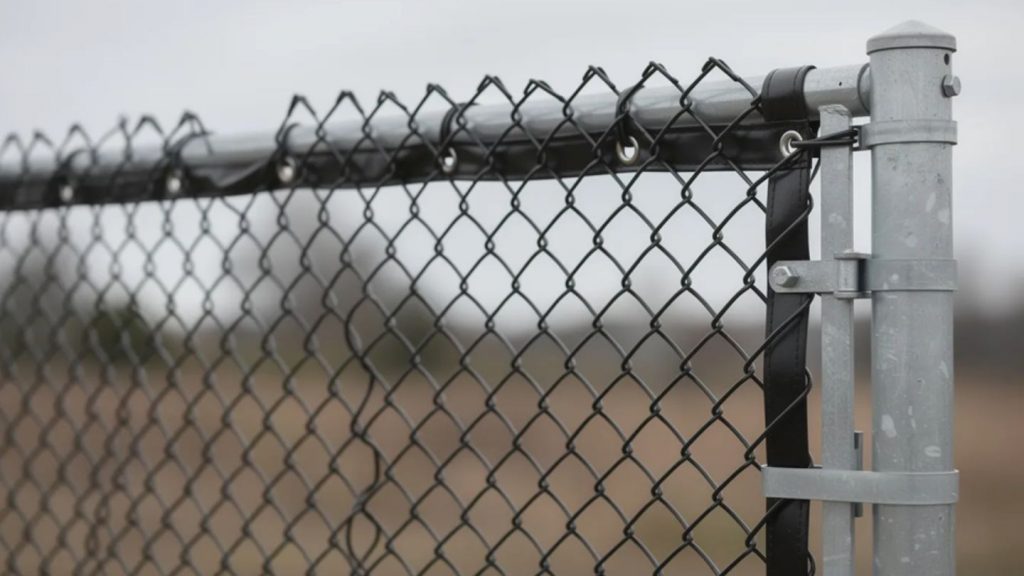
Material choice impacts lifespan, visual appeal, and maintenance costs more than most owners expect. A fence that looks identical on day one can perform vastly differently over 10, 15, or 25 years, depending on the quality of materials used and how well they’re matched to your climate and conditions.
Galvanized Steel Chain Link remains the workhorse of court fencing for good reason. It delivers an excellent strength-to-weight ratio, handles ball impacts without damage, and provides good visibility and airflow. Standard galvanized chain link offers 15–20 year life expectancy at the lowest initial cost. The main limitation is aesthetics; bare galvanized steel looks utilitarian and can rust over time, particularly in coastal areas or humid climates.
Vinyl-Coated Chain Link (black or green) adds a polymer layer over galvanized wire, extending lifespan to 20–25 years while dramatically improving aesthetic appeal. The coating provides additional corrosion protection and creates a softer surface when tennis balls or players make contact. Black vinyl-coated fencing with powder-coated posts has become the preferred look for private courts and upscale clubs since the 2010s.
Timber or Composite Privacy Fencing serves a specialized role where noise buffering and visual screening take priority. Solid panels along one or two sides can shield courts from neighbors’ views and provide some sound reduction. However, solid walls create problematic wind eddies and aren’t suitable for full perimeter enclosure. Use these sparingly in combination with open mesh systems.
Aluminum Systems excel in corrosive coastal environments where salt air would quickly degrade steel. Aluminum won’t rust, requires low maintenance, and accepts powder-coated finishes in various colors. The limitation is that picket-style aluminum provides less reliable ball containment than tight mesh, often requiring mesh infills near the playing area.
Finish Options
- Hot-dip galvanizing provides baseline rust resistance through a zinc coating; heavier coating weights extend service life
- PVC/vinyl coatings in black or green deliver aesthetics plus enhanced corrosion protection
- Powder-coated posts and rails allow custom colors matching club or school identities
For most tennis court construction projects and general sports courts, vinyl-coated chain link delivers the best balance of cost, longevity, and appearance; factors that align closely with broader tennis court construction and design planning considerations. Use timber or composite only where visual screening and noise reduction justify the added complexity.
Barrier & Backstop Netting Solutions
Modern court projects increasingly use high-tensile netting above or beyond solid fences to capture long balls. This trend has accelerated since about 2010, driven by tighter urban sites, stricter liability requirements, and the simple reality that adding 6–8 feet of lightweight netting costs far less than building 18-foot rigid fencing.
Barrier netting provides the additional space of containment without the structural demands and cost of extra-tall metal fencing. It’s particularly valuable for courts near roads, houses, and parking areas where stray balls could cause property damage or create safety hazards.
Netting Materials
The right fencing material for netting applications depends on your specific conditions:
- Knotless or knotted high-density polyethylene (HDPE) offers excellent UV resistance and 10+ year outdoor life in temperate climates; the most common choice for permanent installations
- Polypropylene netting provides good strength at a lower cost, suitable for temporary setups or lower-impact applications
- UV-stabilized black nets blend visually into backgrounds and resist sun degradation better than lighter colors
- Flame-retardant options may be required for indoor facilities or school athletic facilities meeting strict fire codes
Net Configurations
Suspended “curtain” nets behind baselines or goals represent the most common configuration, particularly where containment must complement regulation elements.
Roof or canopy netting creates fully enclosed multi-sport cages that keep balls entirely contained while maintaining visibility and airflow. This configuration is standard for rooftop courts and parking-deck installations where balls absolutely cannot leave the playing area.
Retractable and divider nets separate adjacent courts in busy complexes. These prevent balls from rolling into neighboring games, improve player safety, and reduce disputes during peak usage times. They’re particularly valuable for pickleball court clusters where rapid-fire play means frequent errant shots.
Sport-Specific Fencing & Netting Recommendations
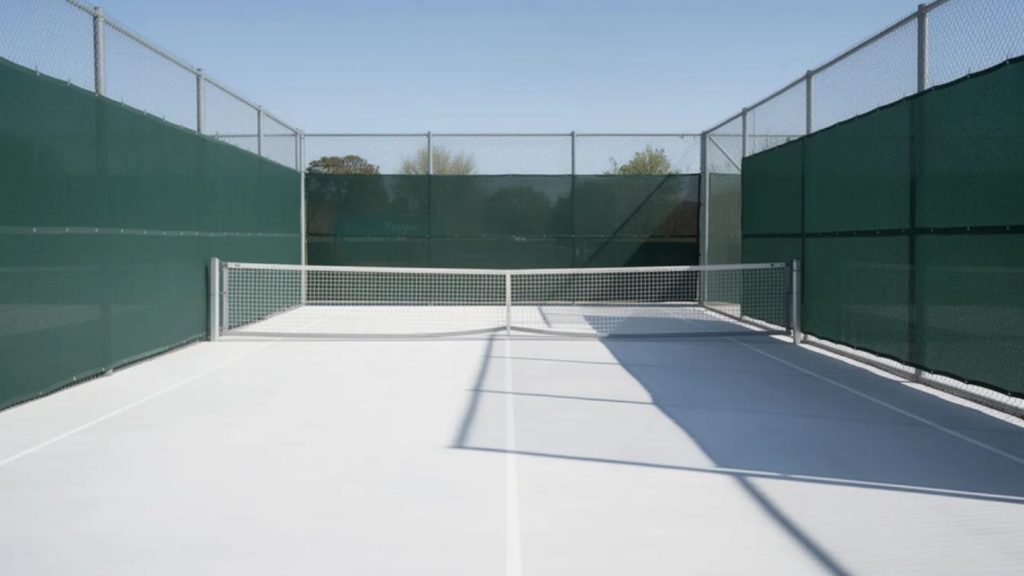
Regulatory bodies like the ITF for tennis, FIBA for basketball, and USA Pickleball provide guidance on court dimensions and enclosure requirements. However, local codes and site conditions ultimately dictate final specifications. What works for a grass court club in a rural setting differs significantly from urban hard courts squeezed between buildings.
Tennis Court Fencing & Netting
For tennis court fence applications, the standard approach has remained consistent: 10–12 ft high galvanized or vinyl-coated chain link with 1.75” mesh using 9 or 11 gauge wire.
- Full-height fencing belongs on baselines where serves and groundstrokes send tennis balls on high trajectories
- Sideline fencing can step down to 4 ft for improved visibility and wind flow, particularly near spectator areas
- Gates should be positioned away from baseline run-off areas to avoid interfering with player movement
- Bottom rails or tension wires prevent balls from slipping under the fence; a common frustration on older courts
Common add-ons for tennis court construction include 70–80% opacity windscreens for wind protection and privacy, overhead netting for courts near roads or houses.
Pickleball Court Fencing & Netting
Pickleball’s explosive growth since 2018 has created strong demand for purpose-built facilities. The lighter ball and smaller court dimensions mean slightly lower fencing generally suffices; 4-8 ft chain link fencing handles most situations.
- Acoustic measures deserve serious consideration in noise-sensitive residential areas where the distinctive paddle “pop” has generated neighbor complaints and even local regulations
- Vinyl-coated mesh, acoustic barriers, and partial solid panels can all help reduce sound transmission
- Divider netting between adjacent courts prevents balls from rolling into neighboring games, improving both player safety and reducing disputes in busy pickleball court complexes
Read More: How To Select A Portable Pickleball Net?
Basketball & Multi-Use Games Area (MUGA) Fencing
Basketball courts and multi-use games areas require enclosures that can handle repeated impacts from balls and occasional player contact. Recommendations for these recreational courts include:
- 8–10 ft high perimeter fencing to keep balls on site.
Installation Best Practices & Contractor Selection
Proper installation following manufacturer guidelines and local building codes is as important as product choice. A quality fence installed incorrectly will fail sooner, potentially void warranties, and may create safety hazards. Take time to find the right location for your contractor relationship.
Standard Installation Sequence
A professional court fencing installation follows a methodical process:
- Site measurement and layout; confirming court dimensions, fence positions, and checking for underground utilities before any digging begins
- Post hole excavation and concrete footings; typically requiring 24–48 hours of cure time before proceeding; footing depth must exceed the frost line in cold climates
- Setting posts; line, corner, and gate posts first, then intermediate posts at design spacing
- Attaching rails and mesh; top rails (and bottom rails or tension wires) installed before hanging and tensioning chain link or panels
- Final installations; gates, latches, windscreens, and any divider nets, followed by quality checks
Critical Technical Points
- Adequate footing depth below the frost line prevents heaving that can lean or break fence posts
- Correct fence tension avoids sagging without over-tightening that distorts posts, framework and the chain link.
- Proper bracing at corners handles loads from strong winds and frequent use
- Drainage systems near posts prevent water accumulation that accelerates corrosion
Choosing Your Contractor
Look for these qualifications when selecting a contractor:
- Proven track record with sports court projects (not just residential fencing), with photos and references from recently completed jobs.
- Knowledge of relevant standards, including ITF/USTA requirements for tennis courts.
- Detailed written quotes specifying materials (gauge, coatings, brands), timelines, and warranties; vague quotes often lead to disputes.
- Evidence of insurance and, where required, licensing for work on public or private sites.
- Willingness to discuss drainage systems, subsurface drainage considerations, and the court’s foundation coordination
Plan installation dates to avoid key sports seasons when the court should be available. Factor in +/- 4 weeks’ lead time for custom-color materials or fabricated gates.
Read More: Questions to Ask a Tennis Court Contractor Before Hiring
Final Takeaways on Court Fencing and Netting
Choosing the right court fencing and netting solution comes down to safety, durability, and proper planning. Height, materials, location, and surrounding environment all play a role in long-term performance. When designed correctly, these systems protect players, reduce risk, and support consistent play across multiple court types.
Talbot Tennis delivers experienced guidance, quality craftsmanship, and dependable project execution if you’re planning tennis court construction in the southeast United States. We specialize in the construction and resurfacing of tennis courts, basketball courts, bocce ball courts, and pickleball courts to support complete, well-rounded court projects. We work closely with clients to design fencing and netting systems that meet technical needs and long-term goals. Let us help you move forward with confidence and clarity.
Frequently Asked Questions
How high should my tennis court fence be if I’m next to a busy road?
Courts beside roads typically use 10-ft end fences with an added 3–6 ft of ball-stop netting. Always confirm insurer and local authority requirements. Adequate height reduces safety risks, prevents balls from entering traffic, and helps limit liability exposure.
Can I install court fencing or netting without planning permission?
Minor residential fencing within existing boundaries may not require planning permission. Requirements vary by location, so checking with the governing local jurisdiction is essential to avoid fines, delays, or forced removal.
How long does quality sports fencing last?
Galvanized chain link fencing generally lasts 15–20 years, while vinyl-coated systems can reach 20–25 years with maintenance. UV-stabilized netting usually lasts 8–15 years, depending on climate, exposure to salt or wind, and how well tension and debris are managed.
What’s the best option if I have a rooftop or parking-deck court?
Rooftop and deck courts usually use lightweight barrier netting with engineered posts to minimize structural load and wind resistance. Solid panels are limited or avoided. A structural engineer must review designs, and lighter playing surfaces like synthetic turf are commonly selected.
Can court fencing reduce noise from tennis and pickleball?
Standard mesh fencing does not significantly reduce noise. Sound control typically requires solid or acoustic panels, wind screens, or landscaping. The best results come from proper court placement, fence orientation, and surface choices made during the design stage rather than after installation.