
Building a pickleball court is a multi-phase process that demands careful planning, technical expertise, and clear communication between you and your contractor. Understanding what to expect when working with a pickleball court contractor-from consultation to completion-removes uncertainty and helps you make informed decisions at every stage. Whether you’re planning a private court in your backyard, adding courts to a community park, or developing commercial pickleball courts for a recreation center, the journey follows a predictable path that experienced pickleball court builders manage daily.
At Talbot Tennis, we’ve guided property owners across Georgia and South Carolina through this process for nearly 50 years. Our experience building and resurfacing tennis courts and pickleball courts gives us deep familiarity with local soil conditions, permitting requirements, and the climate challenges that shape every pickleball court project in the Southeast.
This guide walks you through each phase of the process-from your first phone call through the final walkthrough-so you know exactly what’s happening, why it matters, and how long each step takes.
Key Takeaways
- Building a pickleball court typically takes 4 to 8 weeks from construction start to completion, with the full process from consultation to first play spanning roughly 8–12 weeks.
- The consultation phase includes a thorough site evaluation, design planning, detailed cost proposals, and permit coordination.
- Court construction follows distinct phases: site preparation, grading, asphalt base installation, acrylic sports surfacing, and final accessories.
- Clear communication protocols and established timelines between you and your contractor ensure smooth project execution and minimize surprises.
- Quality pickleball court builders explain the applicable workmanship and manufacturer warranty information for each project and provide post-installation maintenance guidance to help support long-term court performance.
The Initial Consultation and Assessment Phase
Every well-built pickleball court begins with a conversation. During the initial consultation, your contractor gathers critical information about your goals, your property, and your budget to determine whether your vision is feasible-and what it will take to make it a reality.
Expect your contractor to ask about intended use. A basic court for active families has different requirements than commercial pickleball courts at a sports facility or a tournament-grade installation with multiple courts. Your answers shape decisions about court surface, court lighting, fencing height, seating areas, and overall project scope.
The cost of building a pickleball court depends on several project-specific factors, including site conditions, grading requirements, drainage improvements, foundation type, surfacing system, fencing, lighting, and additional amenities. During the consultation, Talbot Tennis evaluates these variables to develop a detailed proposal based on the property’s unique requirements rather than relying on generalized pricing estimates.
The first meeting also establishes timeline expectations. Your contractor should provide a realistic schedule that accounts for permitting, weather, project sequencing, and the scope of work involved.
What Happens During the Site Evaluation and Site Preparation
After the initial conversation, your contractor visits the property to conduct a hands-on site evaluation. This is where technical expertise becomes essential. The site assessment phase includes reviewing soil stability and drainage conditions, checking for soft spots, measuring available space, and identifying obstacles such as trees, slopes, utilities, or overhead obstructions.
A regulation pickleball court size is 20 feet by 44 feet, but the recommended total playing area is 30 feet by 60 feet when you include buffer zones for safety and player movement. Tournament-grade courts may require even more space, up to 34 by 64 feet. Your contractor measures your available area to confirm that proper court dimensions and clearances can be achieved. The court type also affects layout, setbacks, and approval requirements.
Proper site evaluation helps determine whether additional soil investigation, grading improvements, or drainage modifications may be needed before construction begins. Depending on the property’s existing conditions, Talbot Tennis evaluates soil stability, natural drainage patterns, subgrade conditions, and water movement to recommend an appropriate construction approach that supports long-term court performance.
Court orientation is an important design consideration because it can affect player visibility throughout the day. Whenever site conditions allow, many court designers recommend a north-south orientation to help reduce sun glare during play. Talbot Tennis also evaluates property layout, drainage, access, surrounding structures, and available space to recommend the most practical court orientation for each project.
Design Planning, Court Surface, and Proposal Development
Once the site evaluation is complete, your contractor moves into the design phase. This is where your new pickleball court takes shape on paper before any ground is broken.
Design decisions include selecting the asphalt base design, choosing the acrylic sports surfacing system, finalizing the court layout, and specifying accessories. Your contractor will recommend the most appropriate construction approach based on site conditions, project goals, and long-term performance requirements.
Surface type selection is one of the most important choices you’ll make. Acrylic sports surfacing systems are commonly used for outdoor pickleball courts because they provide durable, weather-resistant playing surfaces with consistent ball response when properly installed and maintained. Depending on the owner’s goals, Talbot Tennis can also discuss cushioned surface systems designed to provide additional player comfort while recommending the most appropriate solution for the project’s intended level of play.
Your contractor should present a detailed proposal outlining the project scope, total price, construction timeline, applicable warranty information, owner responsibilities, maintenance recommendations, and responsibility for permits where applicable.
Permit, zoning, and licensing requirements vary based on the project scope and the local authority overseeing the property. Depending on the location, a court project may involve zoning approval, setback requirements, grading or land disturbance permits, stormwater review, and electrical permits for lighting. Understanding how pickleball court contractors manage permits, codes, and zoning requirements can help property owners prepare for these steps and avoid unnecessary delays. Talbot Tennis works with clients to identify the approvals that may apply to each project in Georgia or South Carolina.
Common Mistakes to Avoid During Planning
Planning errors create delays, cost overruns, and courts that underperform. Here are mistakes to watch for:
- Skipping proper site preparation planning: Proper site preparation is crucial for long-lasting courts. Failing to address soil issues, drainage patterns, or subgrade compaction upfront leads to structural failures after construction.
- Choosing inadequate drainage design: Proper drainage is one of the most important aspects of court construction. Drainage design should follow the project plans and applicable engineering or sports construction recommendations to minimize standing water and help protect the court surface over time.
- Ignoring buffer zones: Omitting adequate run-off areas around the playing surface compromises player safety and limits the court’s usability for competitive play.
- Underspecifying the asphalt base: An asphalt base that is not properly designed or installed for site conditions can affect long-term court performance. Talbot Tennis evaluates soil conditions, drainage, anticipated use, and project requirements to recommend an appropriate asphalt base design for each project.
Pickleball Court Construction Phases and Project Timeline
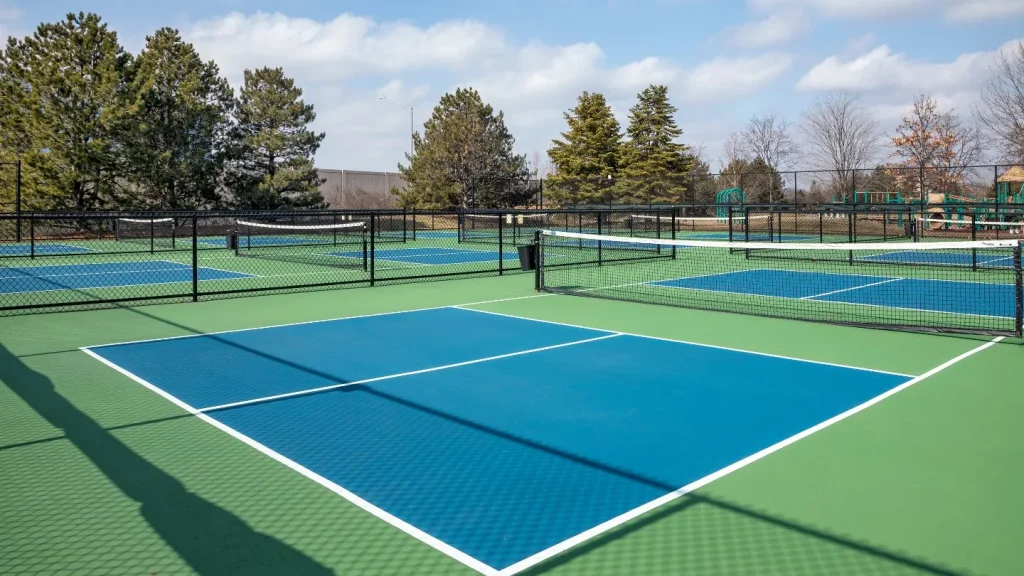
Once permits are secured and the proposal is signed, construction begins. Understanding each phase-and why it takes as long as it does-helps you stay informed and confident throughout the build. Each phase depends on decisions made earlier in the planning process, including the court layout, orientation, base material, drainage strategy, surface system, fencing, and lighting. A detailed overview of pickleball court design and construction considerations for a successful project can help owners understand how these elements work together before crews begin preparing the site.
Site Preparation (1–3 days for residential; longer for complex sites):
Site preparation includes clearing, grading, and ensuring proper drainage with a slight slope. Crews remove vegetation, tree stumps, and debris; excavate to the required depth; locate and mark underground utilities; and compact the subgrade in layers to achieve the density needed to support the court base. Proper grading and water management also protect how the court performs over time. Difficult access, steep slopes, or rocky subsoil can extend this phase.
Base Installation (1–2 days of active work):
With the subgrade prepared, crews install the asphalt base according to the project’s design specifications. The asphalt base is constructed to support the acrylic sports surfacing system while accounting for site conditions, drainage requirements, intended use, and long-term performance. Talbot Tennis follows established sports construction practices to help provide a durable foundation for each court.
Base Stabilization and Project Scheduling:
After the asphalt base is installed, the project proceeds according to the construction schedule before acrylic surfacing is applied. Weather conditions and site-specific factors influence the timeline, and Talbot Tennis schedules each phase to help support proper surface performance and long-term durability.
Surface Application, Line Striping, and Net Installation (2–4 days):
Once the asphalt base is ready for surfacing, crews install the surfacing system to meet official court surface standards, beginning with a primer coat followed by multiple layers of acrylic surface coating with sand aggregate for surface texture and grip. Court lines-baselines, sidelines, non-volley zone lines, and centerlines-are painted to USA Pickleball specifications at exactly 2 inches wide in a color that contrasts with the playing surface for ball visibility. Net posts and the pickleball net are installed to regulation height: 36 inches at the posts and 34 inches at the center.
Fencing, Lighting, and Accessories (2–5 days):
Fencing, lighting, gates, windscreens, and other accessories are installed according to the approved project design. The specific fencing height, lighting layout, and accessory package vary depending on the property’s intended use, local regulations, player preferences, and overall project goals.
Overall, building a pickleball court typically takes 4 to 8 weeks from construction start to completion. Indoor courts follow a different schedule because enclosure and climate-control work add steps beyond a standard outdoor build. A permanent court also requires more extensive base and surfacing work than a temporary setup. From initial consultation and contract signing through first playable point, expect 8–12 weeks total.
Read More: Top Advantages of Using LED Lighting for Pickleball Courts
Communication and Project Management
How your contractor communicates during construction is just as important as the technical quality of the work on specialized sports surfaces. A professional pickleball court contractor assigns a project manager or dedicated point of contact who keeps you informed throughout every phase. Before signing a construction agreement, property owners should evaluate the contractor’s relevant court-building experience, communication process, references, proposal details, and approach to project oversight. Knowing how to choose the right pickleball court contractor for your project can make it easier to identify a qualified team that provides clear expectations from consultation through completion.
Expect updates at least weekly during active construction, with additional milestone check-ins after critical stages: completion of grading, asphalt base installation, surface application, and final accessory installation. Many contractors provide progress photos and schedule updates via email or phone so you can see exactly where things stand.
Weather delays are a reality in sports construction, especially in the Southeast, where summer storms and humidity affect curing and coating application. Your contractor should notify you promptly about weather-related schedule adjustments and explain how they affect the overall timeline.
A clear change order process is essential. If unexpected conditions arise during construction-soft soil requiring additional excavation, unmarked utilities, or client-requested additions-your contractor should document the change, explain the cost and time implications, and get your approval before proceeding. This prevents surprise charges and keeps the project on budget.
Quality control measures should be built into the process. Throughout construction, Talbot Tennis performs quality control inspections during key project phases to verify grading, drainage, foundation preparation, surfacing, and accessory installation. These inspections help identify any issues before the project advances to the next stage and support the long-term durability and playability of the finished court.
Read More: Converting a Tennis Court Into a Pickleball Court
Final Installation and Project Completion
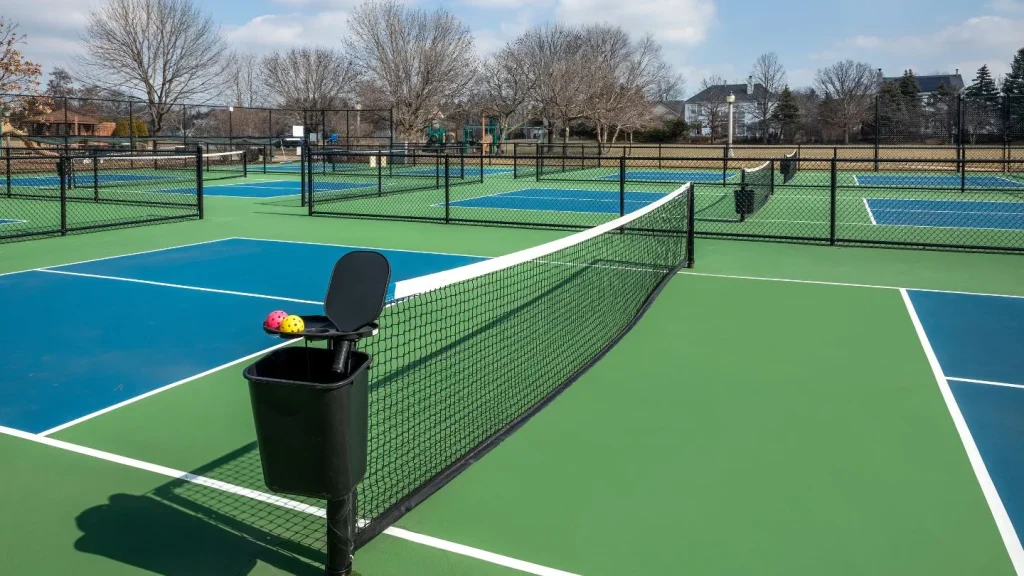
The final phase of your pickleball court project brings everything together. After surface coatings have cured and court lines are applied, your contractor installs the remaining accessories: fencing, lighting, net systems, windscreens, and any seating or storage features.
Court lighting deserves special attention. LED fixtures designed for sports facilities provide even illumination across the entire court area for evening play while meeting local codes for light spill and glare. Your contractor should demonstrate the lighting system during the walkthrough so you can verify coverage and uniformity.
The Final Walkthrough: Before signing off on the project, you and your contractor conduct a thorough walkthrough of the completed court. Here’s what to inspect:
- Surface quality: Check for uniform surface texture, consistent color, and no visible defects in the acrylic coating. The pickleball court surface should be smooth, level, and free of defects.
- Drainage performance: If possible, test with water to confirm proper drainage. Water should sheet off the playing surface without pooling. Outdoor courts typically require a slope of 1% for drainage-approximately 1 inch of drop per 10 feet. Good water shedding and a uniform finish also help pickleball players enjoy safer, more consistent play.
- Court lines and markings: Verify that all lines are straight, crisp, and correctly positioned. The non-volley zone should measure exactly 7 feet from the net on each side, and court dimensions should match the regulation 20 by 44 feet for doubles play.
- Net height: Confirm 36 inches at the net posts and 34 inches at the center.
- Fencing and gates: Test gates for smooth operation and verify fencing is secure and properly tensioned.
- Lighting: Test all fixtures and confirm uniform coverage across the court.
Warranty and Maintenance: Warranty coverage varies depending on the products installed and the terms of the construction agreement. During project closeout, Talbot Tennis reviews the applicable workmanship and manufacturer warranty information with each client and provides maintenance recommendations that help maximize the court’s long-term performance.
Your contractor should provide a written maintenance schedule. Regular maintenance includes cleaning and inspecting for cracks, with acrylic surfaces requiring cleaning with pressure washers as needed. Inspect courts for frost heave damage each spring in colder climates. Long-term maintenance requirements vary based on climate, usage, drainage, and routine care. Regular cleaning, periodic inspections, and prompt repair of minor surface issues can help extend the life of a court. When resurfacing eventually becomes appropriate, Talbot Tennis evaluates the existing court condition before recommending the most suitable restoration approach.
Read More: What Pickleball Court Lighting is Required?
Building a Court Designed for Long-Term Play
Creating a successful pickleball court is about more than installing a playing surface. From the initial consultation and site evaluation to design, permitting, construction, and the final walkthrough, every phase contributes to the court’s long-term performance, safety, and durability. Working with an experienced contractor helps ensure that each decision is tailored to your property’s conditions, intended use, and future maintenance needs, giving you greater confidence throughout the entire project.
Whether you’re planning a private backyard court or a large recreational facility, Talbot Tennis brings decades of experience delivering high-quality sports court solutions across the Southeast. As a trusted pickleball court contractor in South Carolina, we also design and build tennis courts, basketball courts, padel courts, and bocce ball courts to suit a wide range of residential, commercial, and community projects. Visit Talbot Tennis to learn more about our services, or contact us to discuss the right court solution for your property.
Frequently Asked Questions
How long does the entire process take from consultation to completion?
Building a pickleball court typically takes 4 to 8 weeks from construction start to completion. When you include the consultation, design, and permitting phases, the full timeline from initial contact to your first game is typically 8–12 weeks, though projects for new outdoor courts may take longer when site development is more extensive than a standard backyard build. Project timelines vary based on permitting, weather, site conditions, and the overall construction schedule. Your contractor will provide an estimated timeline based on the specific requirements of your project.
What factors can extend the construction timeline?
Several factors can push your timeline beyond the standard window: permit delays from local municipalities, with projects at community centers sometimes taking longer because public-use work often requires added approvals; recreation centers often facing similar review steps; weather interruptions during critical phases such as base installation or surface coating application; unexpected site conditions such as soft soil or unmarked utilities; client-requested changes during construction; and material supply chain delays. Your contractor should communicate any schedule impacts promptly and adjust the timeline accordingly.
How often will I receive updates during construction?
With a professional contractor, expect updates at least weekly during active construction phases. You should also receive milestone check-ins at key stages-after site prep completion, after the asphalt base installation, before surface application, and before final accessory installation. Many contractors provide progress photos along with schedule updates so you can track the work even when you’re not on-site.
What happens if the weather delays the project?
Weather delays are common in outdoor court construction, particularly in the Southeast. Many pickleball players also prefer drier outdoor conditions because damp courts can affect traction and ball response. Rain and unsuitable weather conditions can delay asphalt installation and acrylic surface coating application. Your contractor should have a weather contingency plan and communicate any schedule adjustments promptly. Most experienced builders account for weather variability in their original timeline estimates.
What kind of warranty and pickleball court cost should I expect on my new pickleball court?
Warranty coverage varies depending on the products selected, the project scope, and the terms outlined in your proposal and construction agreement. Talbot Tennis reviews the applicable workmanship and manufacturer warranty information with each client during project closeout and explains any maintenance responsibilities associated with the installed system.
When can I start playing on my new court after completion?
After the final walkthrough and contractor sign-off, you can typically begin playing immediately. Your contractor will advise when the court is ready for play based on the construction schedule, weather conditions, and the installation requirements of the acrylic sports surfacing system.
Written by Talbot Tennis Content Team
Technically Reviewed by Lucas Robinson
Project Manager
Talbot Tennis
